Czech companies have decided to adopt AI. That's good. But right after it comes a second decision that hardly anyone talks about: who will build it.
Czech companies have decided to adopt AI. That's good. But right after it comes a second decision that hardly anyone talks about: who will build it. And that is exactly where the most money is lost today. This article is about why AI implementation is not a new field, how to tell whom to entrust it to, and what to calculate before you sign the first invoice.
What the numbers say
At the turn of the year the Czech Association of Artificial Intelligence and the Chamber of Commerce surveyed 1 033 Czech companies. Nine out of ten companies plan to use AI this year, two thirds are raising their budget by a quarter or more. And at the same time: 80% of companies lack qualified people and most admit they can't measure the return.
Translated: demand for people who can implement AI appeared overnight. Supply can't be produced overnight. So it gets produced at least for show.
A new profession that appeared overnight
I see this in practice again and again. A person who a year ago worked in a completely different field goes through a few weekend courses, writes AI consultant on LinkedIn and goes off to tell a manufacturing company how its operations should run. They have never stood on a factory floor. Never done an assessment. Never designed a system that has to run for years, not for a week until the presentation.
And the company has no way to tell. That isn't a reproach towards owners, it's logical. When AI looks like a completely new field, it seems old experience doesn't apply and everybody starts from zero. So candidates can't be compared by craft. And when craft can't be judged, confidence gets judged. Confidence is currently the cheapest raw material in the AI business.
The mistake has one root: a prompt interface feels like expertise. It isn't. Being able to write a prompt is like being able to write an email. Useful, anyone learns it in an afternoon, and it makes nobody an architect.
AI is still IT. That hasn't changed
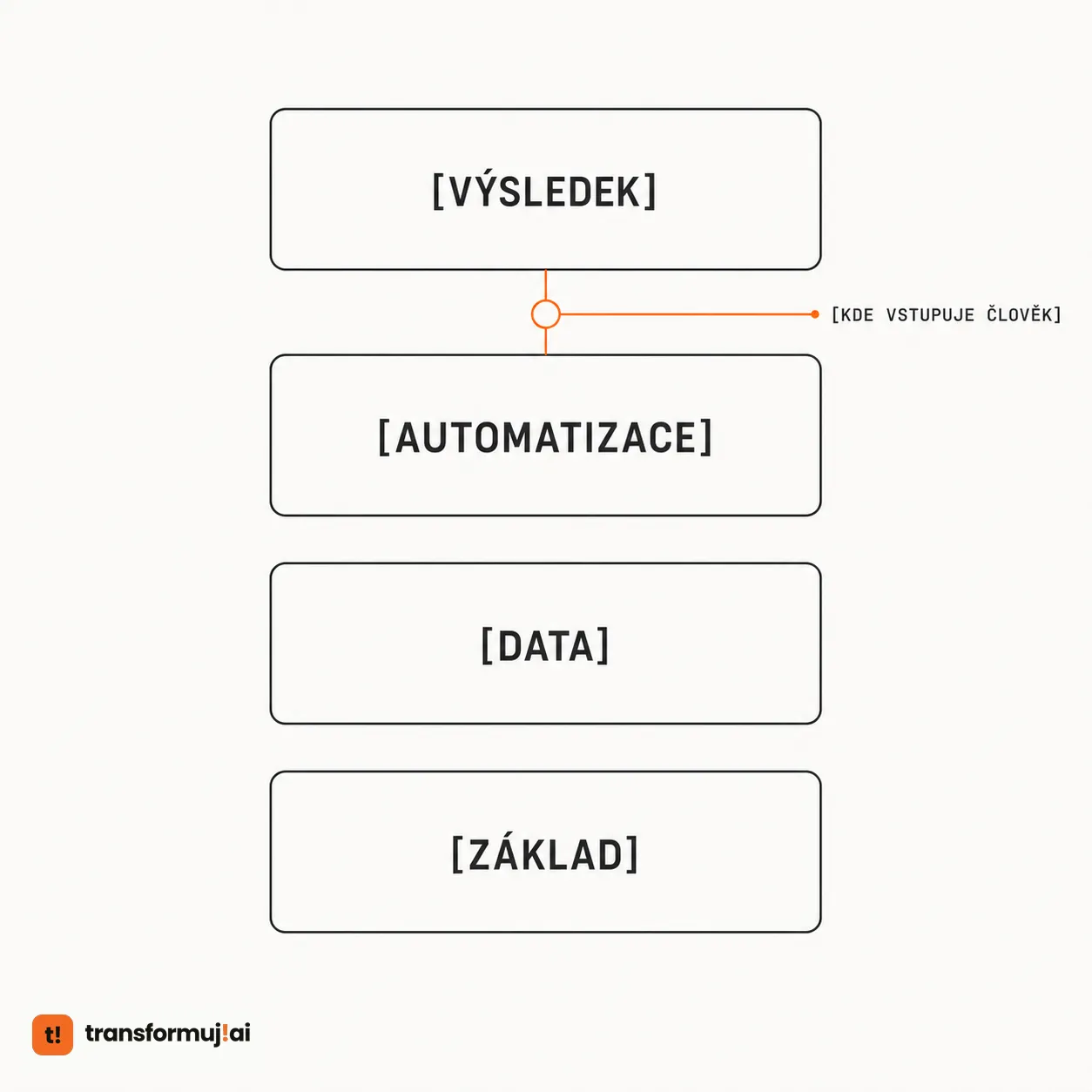
The chat window gives the impression that nothing stands between you and the technology any more. You write a sentence, a result pops out. But that window is only a facade. Underneath is everything that has always been in IT:
Data. Where it flows from, what quality it is, what happens when the ERP has ten years of mess in it. AI on top of bad data just produces bad results faster.
Integration. The solution has to talk to your e-shop, accounting and warehouse. Not to a demo on a slide.
Architecture. What communicates with what, what happens when one part fails, where a person enters the process. A system that fails quietly is worse than a system that crashes loudly.
Security. Where your company data and your customers' data flow.
Operations. Who maintains it in half a year, when the model, the API or the person who set it up has changed.
None of this was abolished with the arrival of AI. It just hid behind a prettier interface. Yes, a few things were added that classic IT didn't teach: working with probabilistic models, evaluating the quality of outputs, working with context. But those are new floors on old foundations, and without data, integrations and operations you have nothing to build on. And by the way, it's not only small companies that come unstuck on this. Zillow, an American real estate giant with an army of data scientists, lost over 500 million dollars in 2021 when it trusted its pricing algorithm more than ongoing measurement. It isn't an example from generative AI, but the principle is the same: the technology didn't fail, the failure was that nobody measured. A Czech company of fifty people won't survive such a mistake without consequences.
Everything that meets in such a design
Here I'll get personal, because this is exactly my experience. I've been in IT, with breaks, since I was 17, and personally I have hundreds of projects behind me. And not only IT projects.
I ran the production of high-end eyewear frames with our own technical hinge solution in my own company. Even today I work in CAD or Blender on drawings all the way to series production, and more than at my former company lume, where my partner was the designer. I learned an awful lot thanks to him, because I spent years next to someone who came from a totally different field and world and on top of that was and is an absolute top figure in it, and I found out how things work.
We called it “wolf fog”: until a person has dealt with the production of a product, drawings, negotiated with engineers and lived through hundreds of hours of working out how to technically make something at all. Thanks to that, when they look at a product, even one they've never made, they have a very good idea and knowledge of how that product is made and actually built.
“Design has a logical structure.” It isn't art where there can be chaos and pure feeling or emotion. Even if many people may not see it that way, product design has a logical structure and has its rules. For example, with our screwless hinge we even had to work out whether the hinge pulls hair or catches it. Silly thing, but a crucial silly thing in terms of the customer's safety and comfort that has to be solved.
Thanks to that I found out that I have an engineering mindset. And at the same time that I have a feel for product and design, which, even if it doesn't look like it, is now paying off in this seemingly unrelated field of AI.
Being multidisciplinary is enormously important in AI architecture, system design, productising solutions and so on, because thousands of hours spent in different fields help me connect things I would otherwise miss.
And I'm not infallible either, which is why I have a partner. Tomáš Neumann, our CEO, is definitely better at processes and operations than I am, he oversees the whole company and makes sure everything runs as it should. And often, like Petr Cipra, our CTO, he says a few sentences to me and an unsolvable problem gets solved.
I led e-commerce projects connected to SAP and other ERPs for companies like ETA and managed the development of Shopify apps for Gopay and for a French giant like Fittingbox. I also built my own subscription business from scratch, including logistics. BUT I'm still learning and still trying to find and talk to people more capable and better than me. Not only do you learn and move forward that way, you also find that you quite often had blinkers on, about completely obvious solutions.

I'm not writing this as a list of trophies. I'm writing it because in designing an AI solution these worlds meet all at once. You have to understand operations for the foreman in the factory to tell you where the shoe pinches at all. You have to understand data to see that half of the problem isn't AI but an untidy ERP. And you have to be able to calculate so that the result is a return in euros, not a good feeling from a presentation. And above all I'm not alone in this, one person can't take in everything :).
Architecture, moreover, isn't knowledge you download. It's a habit backed by thousands of hours of solving problems from different fields and companies. With eyewear it was a hinge that mustn't pull hair. With an e-shop, a warehouse that mustn't lie to accounting. With AI, data that mustn't flow out. The questions are always the same: what happens when this part fails? Who will actually use it? What does it cost over a year of operation? That habit comes from having built things, run them and watched them die. And it's the same wolf fog: once you've been through it, you see the logical structure even in a system you've never built. It can't be acquired in a weekend, in three months, or in a year or two. It's long-term activity, often painful, often without reward, and it can't be hung on social media. That's why it doesn't matter that the field is now called AI. Design has a logical structure and so do systems. The thinking is still the same as with eyewear, e-shops, warehouses, manufacturing and integrations.
A feeling is not a saving
AI solutions and implementation, or even just the design, are unfortunately often not pretty, colourful and super fun. It doesn't take one afternoon and often the whole company doesn't turn towards a better tomorrow in 20 hours. Change is always hard and you're dealing not only with processes but with people. And everyone is different, has different motivation, different cognitive capacity and different willingness.
Vibe coding workshops are great, they're fun, they hurt nobody, nobody gets rapped over the knuckles, and they look great on LinkedIn. We run them ourselves. But there is a clear difference. Vibe coding is great for learning: demonstrations of what can be done, how to think about it, and trying your own things. And tools for personal use or an internal thing for one person are fine too: they run locally on your computer, not on a server, and connect to nothing. That's fun, even team building, and at the same time efficiency and pragmatism.
But once you are buying a fun afternoon as the solution to the company's real problems, it's different. Will it solve them for you? Or are you buying a feeling for yourself and management that something is happening and that you are, after all, dealing with AI?
A feeling = saving time or money? At the end of the day the feeling stays with you, but in the company, apart from the initial enthusiasm, it doesn't show noticeably. And a company isn't made up of individuals either.
What to calculate before you sign anything
That's enough about feelings. Now numbers. Good news: you do the first part yourself, without a supplier and without an IT person. In the industry it's called an AI opportunity assessment. I call it plain counting where your hours and euros flow away.
1. Find out where your team spends its time. Not by guessing, honestly. For a week note what everyone does. Reporting, emails, quotes, retyping data between systems.
2. Convert it into euros. Ten hours of routine a week times 16 EUR per fully loaded hour times 50 weeks is 8 000 EUR a year. One person, one bad habit. Do you have ten people? Keep counting.
3. Only with these numbers in hand talk about a solution. You'll often find that you need something other than what you wanted. A company wants a chatbot, the numbers show that support eats three hours a week and reporting fifteen.
4. Start with the biggest pain that can be solved most simply. A quick win in a few days does more for trust than a roadmap for a year.
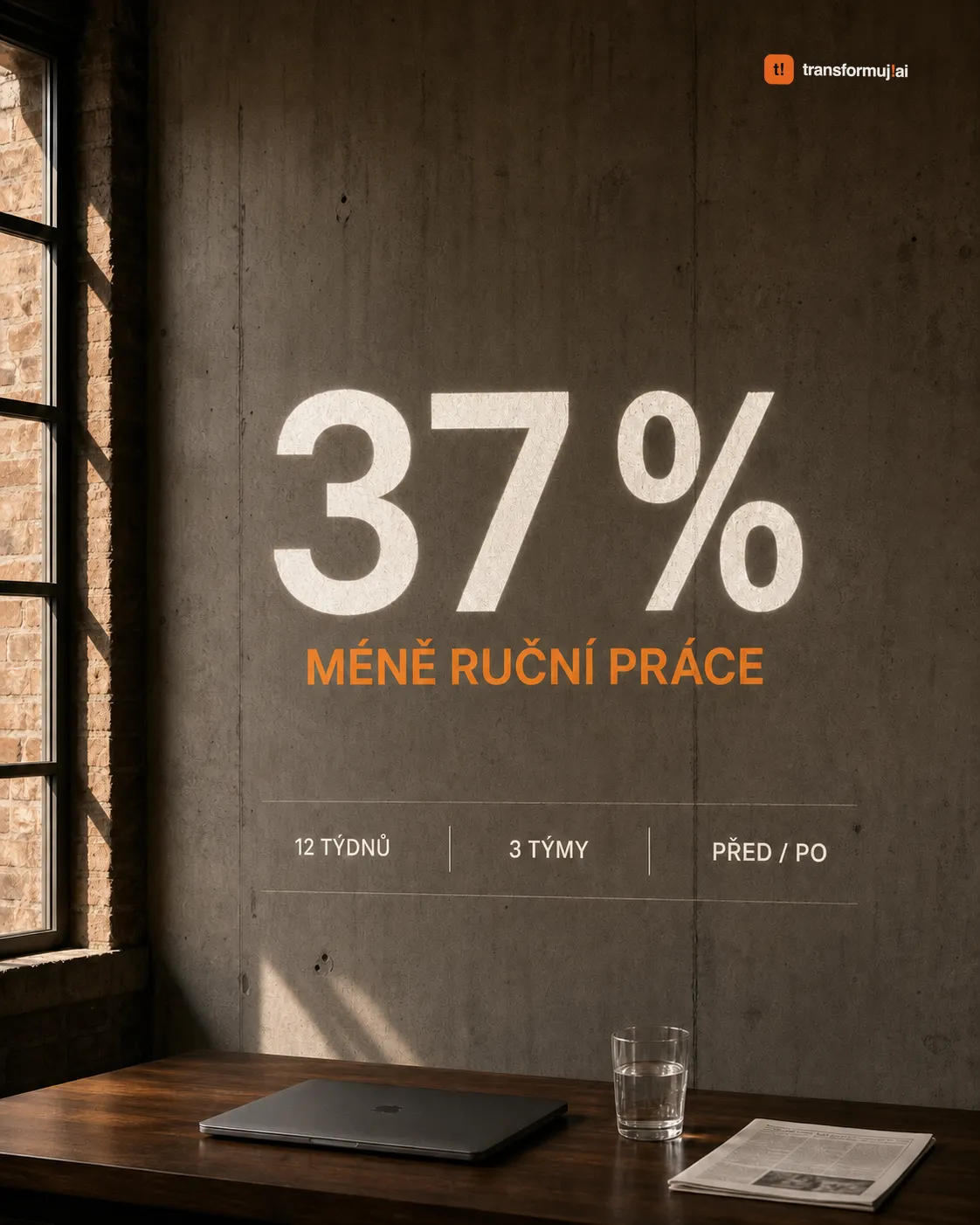
5. Measure before the start and after a month. The difference times the hourly rate is your return, black on white.
How to tell whom to entrust it to
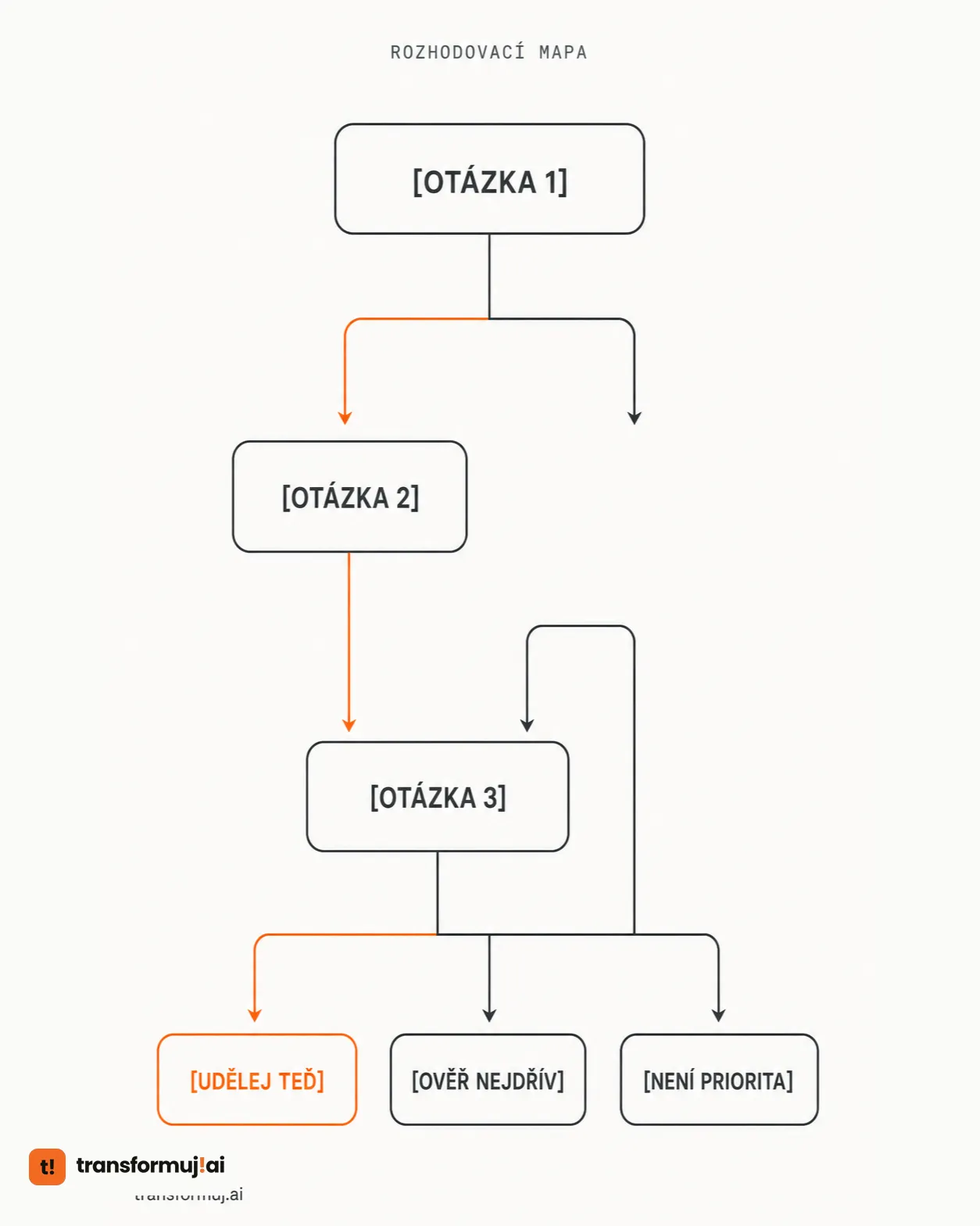
And now the main thing. Three questions to put to anyone who wants to sell you an AI implementation, whether a supplier or a candidate for a position:
1. What did you build three years ago? Craft has a history. If there is nothing about systems, data, products or processes in the answer, you are buying a prompting course with a markup.
2. Tell me about a rollout that didn't go to plan. Whoever ran nothing has nothing to tell. A supplier usually won't show you finished systems, they belong to clients and are often under NDA, which is normal and quite right. But they can give numbers and screw-ups or problems they solved: where they saved how many hours, what went wrong and how they fixed it, and who you can check it with. Anyone can build a demo in an afternoon today. A war story from operations can't be made up.
3. What won't AI do for us? Whoever doesn't admit the limits doesn't know where they are. We are happy to answer this question, because an honest answer saves money for both sides.
And feel free to put those three questions to us on a call or at a personal meeting :).
And ask for a measurement agreed in advance. The state before the start, the state after a month, the difference in euros. With us one sentence applies: if the numbers don't make sense, we'll tell you before you tell us.
Conclusion
I'm not writing this to put you off AI. It should be adopted, and the survey numbers are at heart good news. Just take this away from the whole article:
AI implementation is still IT, even with a prettier interface. Under the chat window there are still data, integration, architecture and operations.
Look for people who have been through the wolf fog. And because one person can't take in all of it, you are buying a team, not an individual.
Don't buy a feeling. A feeling is not a saving. Ask for counting in hours and euros before the start and measurement after a month. Expertise is recognised by history, numbers and war stories from operations, not by confidence on LinkedIn.
Do you know whom you would entrust an AI implementation to today? And how would you recognise them?
If you want to go through the first counting with me, a 15-minute intro call is with no obligation: cal.com/transformuj.ai/30min, or jakub@transformuj.ai.
Sources: ČAUI and Czech Chamber of Commerce survey AI Momentum 2026 (1 033 companies, data collected November to December 2025, asociace.ai). Zillow Offers: GeekWire and CBS News, November 2021.
The article was first published on LinkedIn. Original article on LinkedIn