The Secretary General of the Financial Stability Board gave an interview on 28 July. In it he said the prices of AI companies remind him of something.
The Secretary General of the Financial Stability Board gave an interview on 28 July. In it he said the prices of AI companies remind him of something. The dotcom bubble. And the housing market before the 2008 crisis. And that he may be seeing it again now.
To the owner of a company with fifty people, this sounds like news from another planet.
It isn't. It just translates differently than you'd expect.
What exactly got blended together
The debate about an AI bubble mixes two things that are hardly related.
The first is the tool itself. A program that copies an order into the system for you, pulls the amount from an invoice or writes the first draft of a quote. That works today and will work next Tuesday, whatever happens on the stock market.
The second is the economy around the tool. Who finances it, from what, at what price it is sold and how long that will last.
Economists at the European Central Bank drew that distinction quite nicely in the ECB blog on 17 August. They ask right in the headline whether today's enthusiasm is a reasonable bet or a second edition of the dotcom bubble, and they conclude that a correction in share prices is likely. At the same time they nowhere claim that the technology has no value. They write that after a correction prices may rise even higher, if AI proves big enough.
And here is the part most bubble debates skip. They expect a correction even if today's prices are entirely reasonable. They don't rely on the market being out of its mind.
The reason is worth reading. As long as a new technology is a novelty in one corner of the economy, it's a bet an investor spreads among others. If it fails, they lose one of many. But once it spreads absolutely everywhere, it can't be spread, because when something goes wrong, it goes wrong for everyone at once. Investors demand a premium for this risk, and that pushes prices down.
So the price can fall even though the tool works. For you that means two things at once. What you have deployed will keep running. But whoever deployed it for you may not be as resilient as the technology.

Why this concerns your supplier
And here is the translation into your situation.
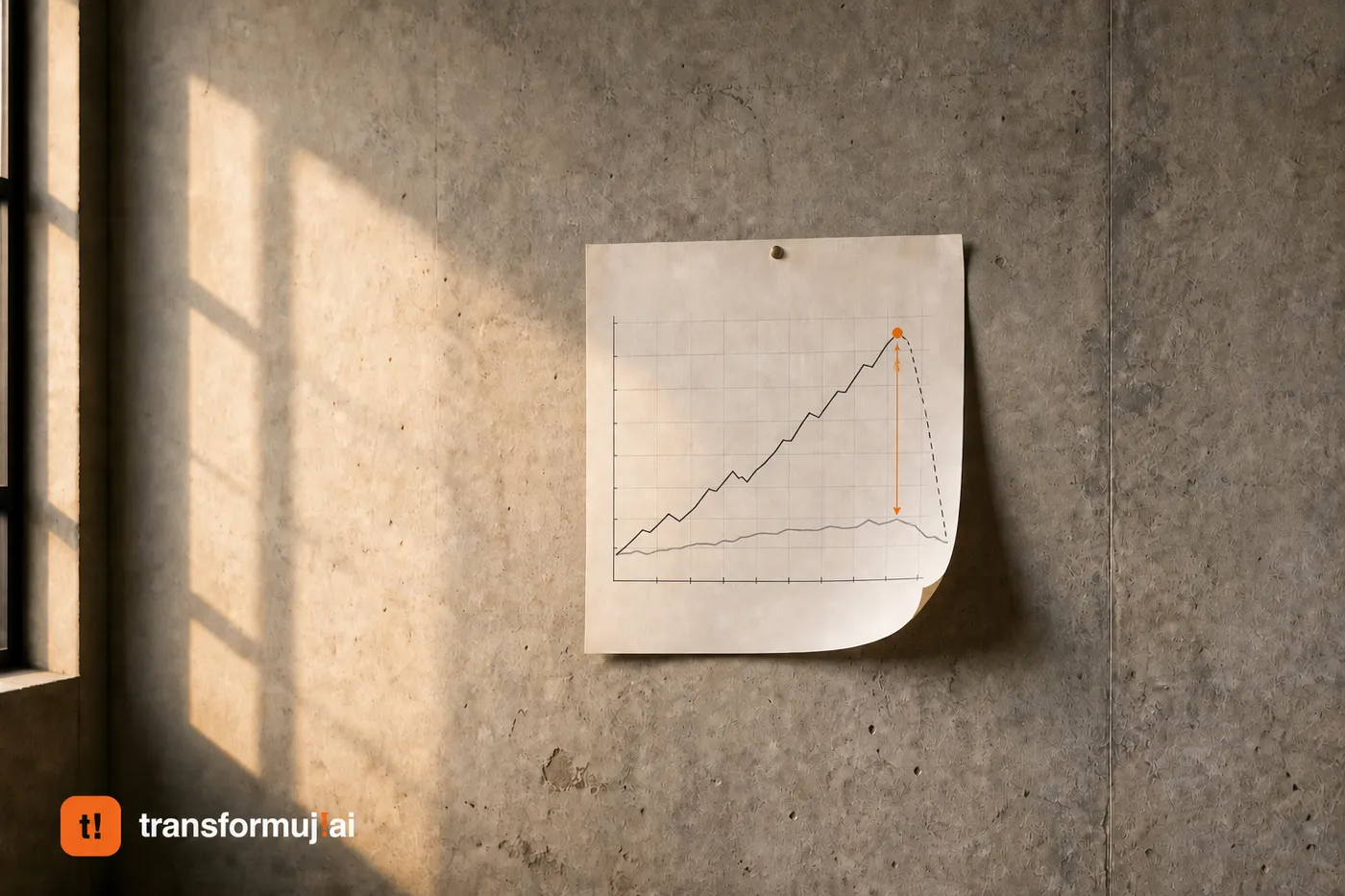
According to a Nikkei study cited by Fortune, the debt of large American tech companies that isn't visible at first glance in the financial statements has grown to 1.65 trillion dollars. Eight times in four years, and it's more than their declared debt. The Bank for International Settlements added two things on 28 June. The five largest data centre operators will put more than a trillion dollars into AI over 2025 and 2026. And these commitments are outgrowing their profits and free cash, so some of them borrow to cover them.
On this wave of cheap money a whole layer of smaller companies has grown that finance nothing themselves. They buy access to someone else's model cheaply, add a screen to it and sell it to you as a finished solution. As long as the purchase is cheap, it works and looks great.
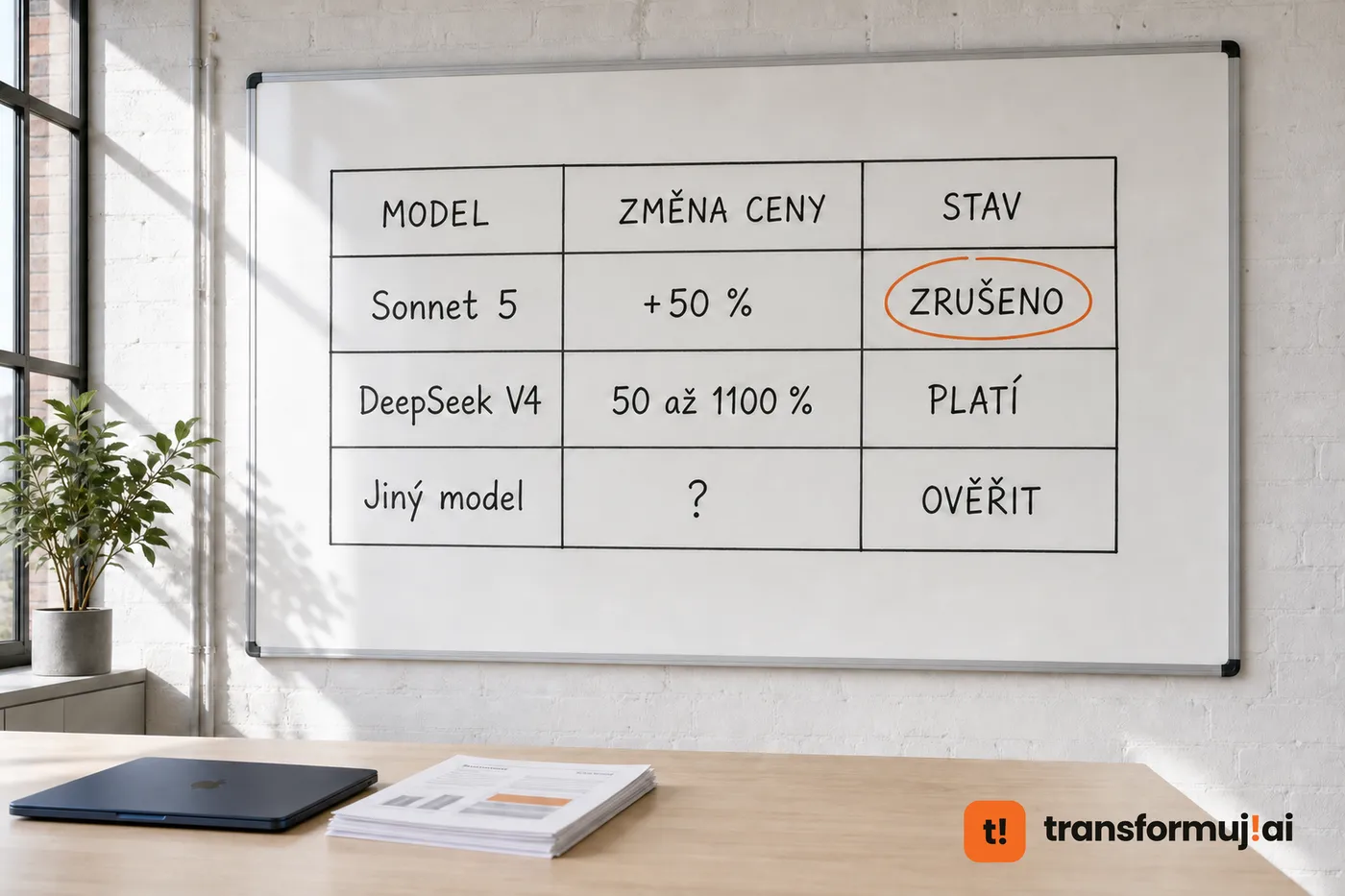
When the purchase gets more expensive, their margin disappears. And that price isn't their decision. The Chinese DeepSeek, the cheapest option on the market for a year and a half, raised prices on 16 August by 50 to 1 100 percent depending on exactly what you buy from it. Anthropic went the opposite way. A price rise of fifty percent on its main working model had been announced for 1 September and in August it cancelled it, the introductory price stays. One raised prices, the other backed off, both within three weeks. Whoever built their margin on this is guessing.
Economists at the Federal Reserve added an uncomfortable observation on 17 July. Investment in AI is growing and pulling the American economy up, but the idea that people get more work done thanks to AI hasn't shown up in the numbers yet.
None of this means that what you have deployed will stop working. It means that some of the companies that sell AI solutions today won't be here in two years.
What a supplier leaves behind
The difference between a good and a bad end to a collaboration can't be told while everything is running. It only shows when the supplier says enough.
Let me explain it with a “wall socket”, because that is how it really works.
When an appliance is plugged into a socket, replacing it takes five minutes. You pull it out and plug in another. The wall stays as it was.
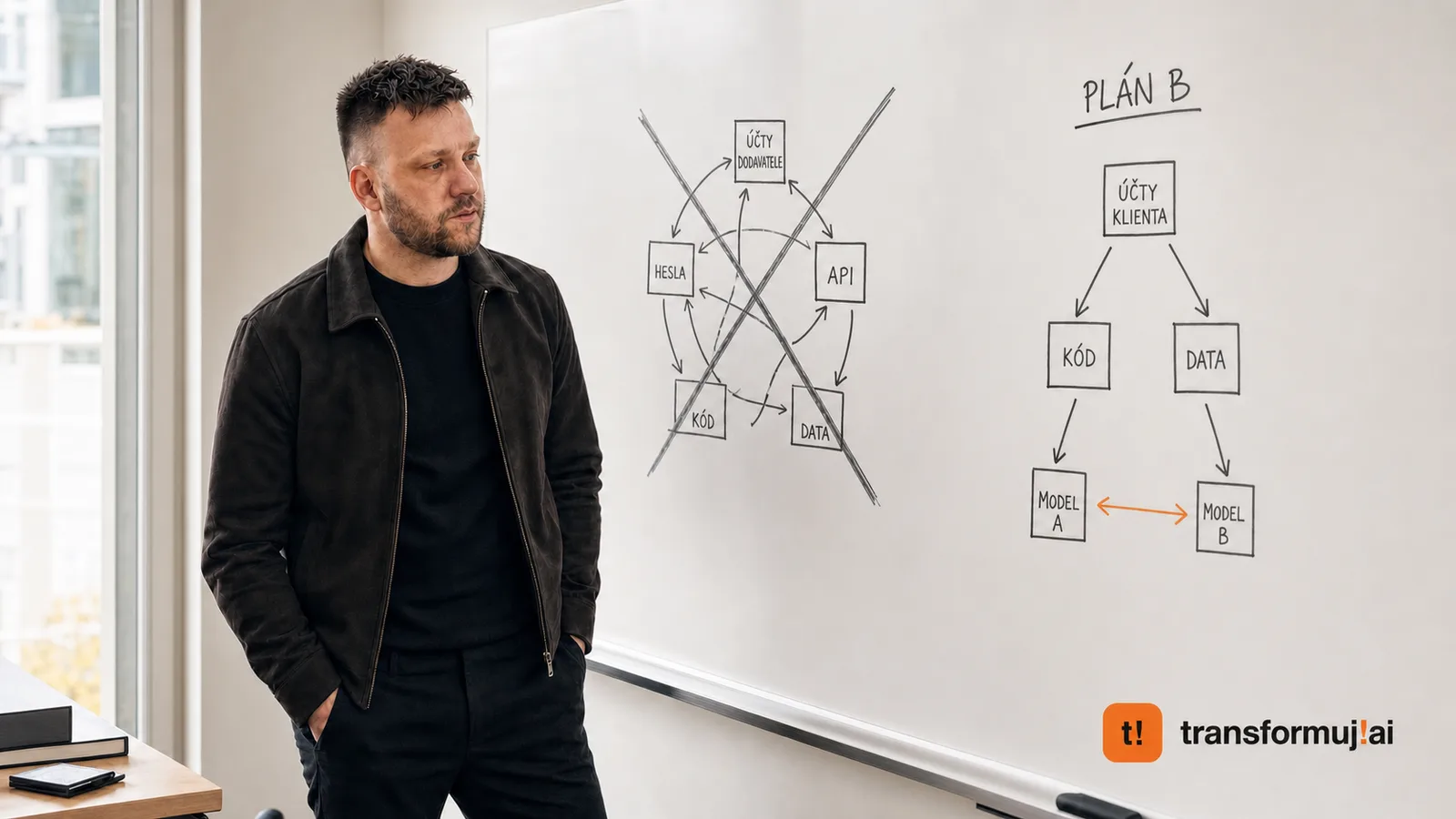
When the same appliance is hardwired into the wall and only the person who put it there has the plans, you need a tradesman for the replacement, demolition and a week without a kitchen.
With software it's exactly the same. When the accounts are held in your name, you have the source files and a description of how it works, and the model supplier underneath can be swapped, the end of the collaboration is an inconvenience. You hire someone else and they take it over.
When everything runs on the supplier's accounts, under their passwords, without written documentation and hardwired to one single service, the end of the collaboration is the loss of the whole system. And it typically arrives at the moment when you have the least time for it.
This is an ordinary risk that a correction will only enlarge, because it will increase the number of companies that end all at once.

What it costs if it goes badly
Let's calculate it, because otherwise it's just scaremongering.
Say you have a system that processes your orders every day. The supplier ends. You don't have the passwords or a description of how it's put together, so a new person first has to take it apart and understand it, and only then build it again.
Taking apart and documenting someone else's solution usually takes forty to eighty hours. Building a replacement another hundred. At a rate of, say, 60 EUR an hour for an external developer, that is 8 400 to 10 800 EUR. On top of that, add the weeks when people process it by hand as before.
This is a model calculation at ordinary market rates, not a measured case of a specific client. But the order of magnitude holds, and it is an order of magnitude more than it would cost to have things held in your name from the start.
Three questions worth asking
In whose name are the accounts held and who has the passwords. Ask about ownership, anyone can manage it for you. The answer should be short and should be in the contract.
How much work it is to swap the model supplier underneath. Ask straight for days and for euros. The answer “a few hours” and the answer “we would have to rebuild it” are two completely different worlds, and they decide whether you are plugged in or hardwired.
What happens if you finish tomorrow. Ask directly. Whoever doesn't have an answer ready hasn't thought about it, and you'll find that out first, for real.
What we do
The client owns the source files and the accounts are held in their name. It is the default state, not an extra.
We build so that the model underneath the solution can be swapped for another without rewriting everything around it. It isn't a technical trick, it's insurance against a price list that none of us can influence.
And we measure before the start and after a month. The difference in euros, black on white. If the numbers don't make sense, we'll say so first, even if it means a smaller job.
When not to buy this and where the limits are
If AI at your place so far means one person getting texts written in a browser, you don't need to deal with this. There is nothing to take over and nothing to lose.
I don't know when the correction will come or whether it will at all. Three of those institutions described the risk, the Fed only a gap between investment and productivity. No date follows from them, so whoever gives you one is guessing.
I don't know either which companies won't survive it. I can describe how to tell in advance, I won't name anyone.
And it certainly doesn't follow that you should wait with AI. That is the most expensive possible reaction. Companies that measure and tune their processes today will be ahead in a year, regardless of what the stock market does.
I wrote in more detail about how to vet a supplier before signing in the article “Money goes in, but nothing is measured”. What to calculate and whom to vet before you buy an AI implementation.
If your AI supplier finished tomorrow, what would you be left with, and how long would it take to take it over?
And if you're wondering whether this would make sense at your place, give me 15 minutes, I'll go through it with you straight, including the case where it wouldn't make sense for you: https://cal.com/transformuj.ai/30min
Sources: interview with the Secretary General of the Financial Stability Board for Politico, 28 July 2026. ECB Blog, 17 August 2026. BIS Annual Economic Report 2026, 28 June 2026. Nikkei study and Moody's data on hyperscaler debt, cited via Fortune, 31 July 2026. Anthropic pricing, 19 August 2026. DeepSeek price list V4 Pro and V4 Flash, 16 August 2026. Federal Reserve FEDS Notes, 17 July 2026.
The article was first published on LinkedIn. Original article on LinkedIn