
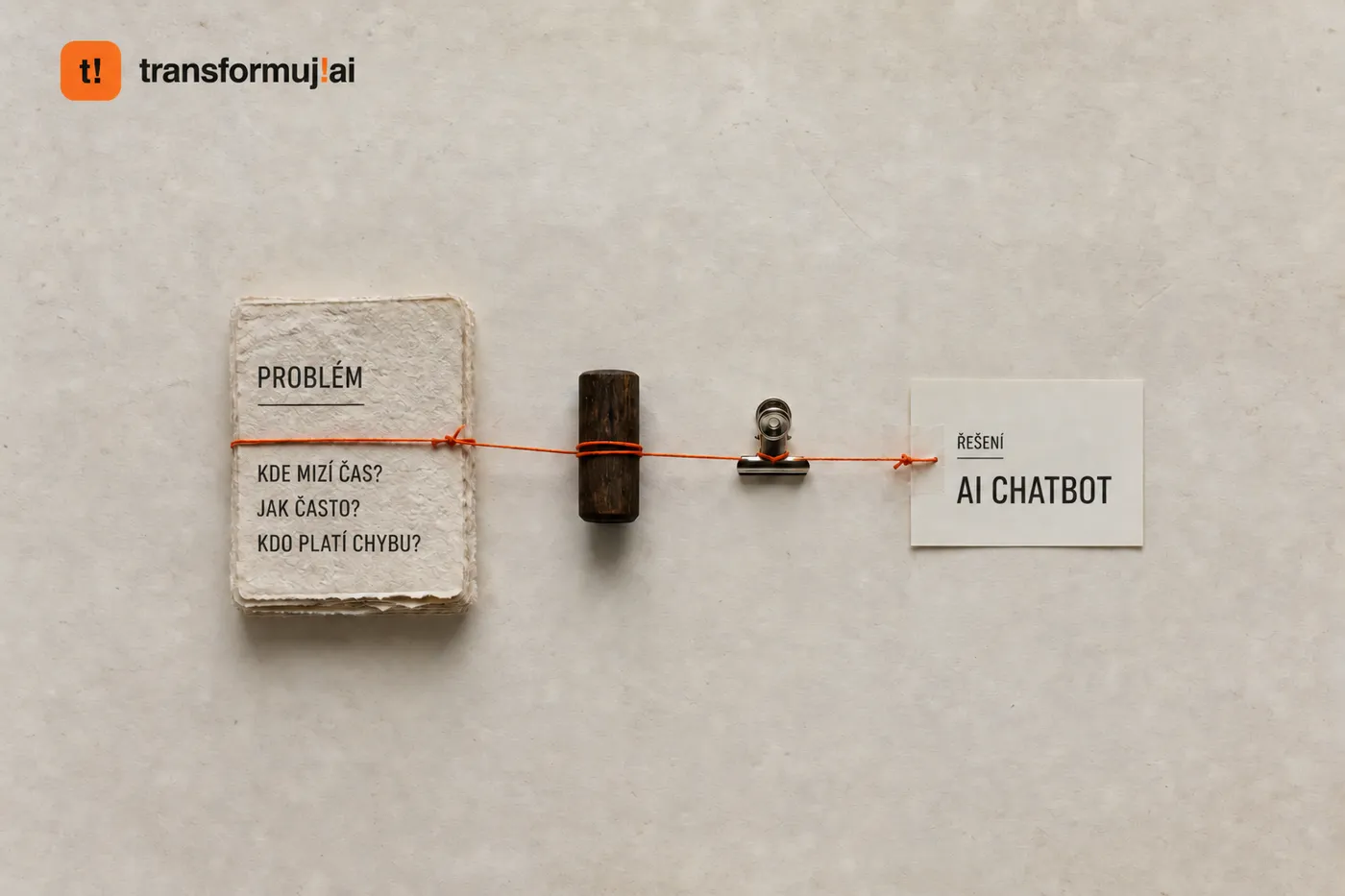
We want a chatbot on the website, a company told me on a call this week. Three sentences later it turned out where their time really disappears: retyping orders from email into the system.
We want a chatbot on the website, a company told me on a call this week. Three sentences later it turned out where their time really disappears: retyping orders from email into the system. A chatbot wouldn't help them even by accident.
A wish and a need are not the same thing. In a company's brief for AI, almost nobody tells them apart.
The brief arrives in the company straight as an order for a solution. A description of the problem is usually missing from it. We want a chatbot on the website. We want Copilot for the team. We want an agent for quotes. That sentence already carries a decision nobody has examined.
Three levers that pre-decide the brief for you
The owner or the head of a department isn't to blame. Three pressures are behind it, and they work inside the company before the brief even gets to me.
The budget cycle wants a line item. In an approval process it's easier to defend “an AI assistant for customer service” than “we want to find out where our time is disappearing”. A budget needs a name. A diagnosis doesn't fit on a budget line.
Supplier marketing sells a finished product. On LinkedIn and in ads you see a demo. Nobody advertises “first work out whether you need it”. A finished thing gets sold, because a finished thing can be shown.
And the person who brings the brief had to narrow it down just to get it onto the table. A head of department doesn't go to the director with “something isn't working for us”. They go with a concrete proposal, because otherwise the meeting doesn't end in a decision. The narrowing is the price for getting anything moving at all.
The bigger the company, the sooner the problem disappears
In a corporation this applies on a larger scale. The brief passes through several departments before it reaches a decision. Each one narrows it a bit so that it gets through. By the time it reaches the person who signs, there is hardly any problem left in it. Only the product remains.
Three questions that separate wanting from needing
Before you order anything, try answering three questions yourself. Or put them to whoever brought the brief.
Where do the hours go? Item by item, where exactly do people spend time on an activity they would rather not do.
How often does it happen? Once a month at the close is a different task from ten times a day with every order.
Who pays when the output is wrong? Does a salesperson fix a wrong price in a quote by hand, or does it go straight to the client?
Three questions. An hour of conversation with the team. The supplier doesn't need to be there yet.
Try it without a consultant first. One meeting, on paper. If a clear answer comes out of it, you have the first number to keep working with.
What happens if you skip this step
The wrong step gets automated. The company from the beginning would get a chatbot that can answer questions from website visitors. It will work. It will look good in the demo. And orders will keep being retyped by hand from email, because that was never a problem a chatbot solves.
The tool works, the saving is nowhere. That is a worse result than if it hadn't worked at all, because it's harder to admit. Companies put it carefully: “We tried AI, it didn't give us much.” The decision about the next step gets postponed by a year. The problem that started it all stays in the company exactly where it was.

What you can calculate yourself and what you can't
This part is honest even against my own interest. You can work out the basics without us. The three questions above you can handle in that hour with the team, and you'll get a rough estimate of where your time disappears. You don't have to buy that piece of work from anyone, and do it before you start asking for quotes on anything.
One hour won't remake a company, though. The difference between what you want and what you need is hard to see from the inside. What you've done every day for years you stop seeing as work that costs time. That isn't incompetence, it's habit. That's why we usually see the difference from the outside before you do, and it applies even in a small company where one person keeps the operations in their head.
It starts with an hour-long call. A lot gets clarified on it and some things get settled right away. What I can't learn from it is how your company runs on the inside, and without that I have nothing to build for you. That's why the call is followed by an opportunity mapping, from 800 EUR. It isn't a list of what you're doing wrong, but a list of places where time can be won, ranked by impact and effort. You click through part of it yourself, then we go through a guided meeting together, and within five working days you have a report with numbers and a verdict.
From there it branches depending on the size of the company and how deep it goes. When processes cross departments and systems, a detailed mapping at your place comes next, from 1 600 EUR. When the whole team needs to be able to work with it, a full-day workshop follows, and for a deeper intervention in processes it takes several days. Sometimes both are needed.
Whenever we build something with you, this mapping happens every time to some extent. Without it I can't say whether to recommend an implementation at all, whether an off-the-shelf solution is enough or it should be custom-built, and whether the problem is just in the process, which an AI layer would be glued onto and hide. It isn't an extra item. It's a condition without which I can't promise you that the thing will pay back in hours and euros.
That's why the whole amount you paid is credited towards the follow-up work. You don't pay twice.
Conclusion: the tool is the last step
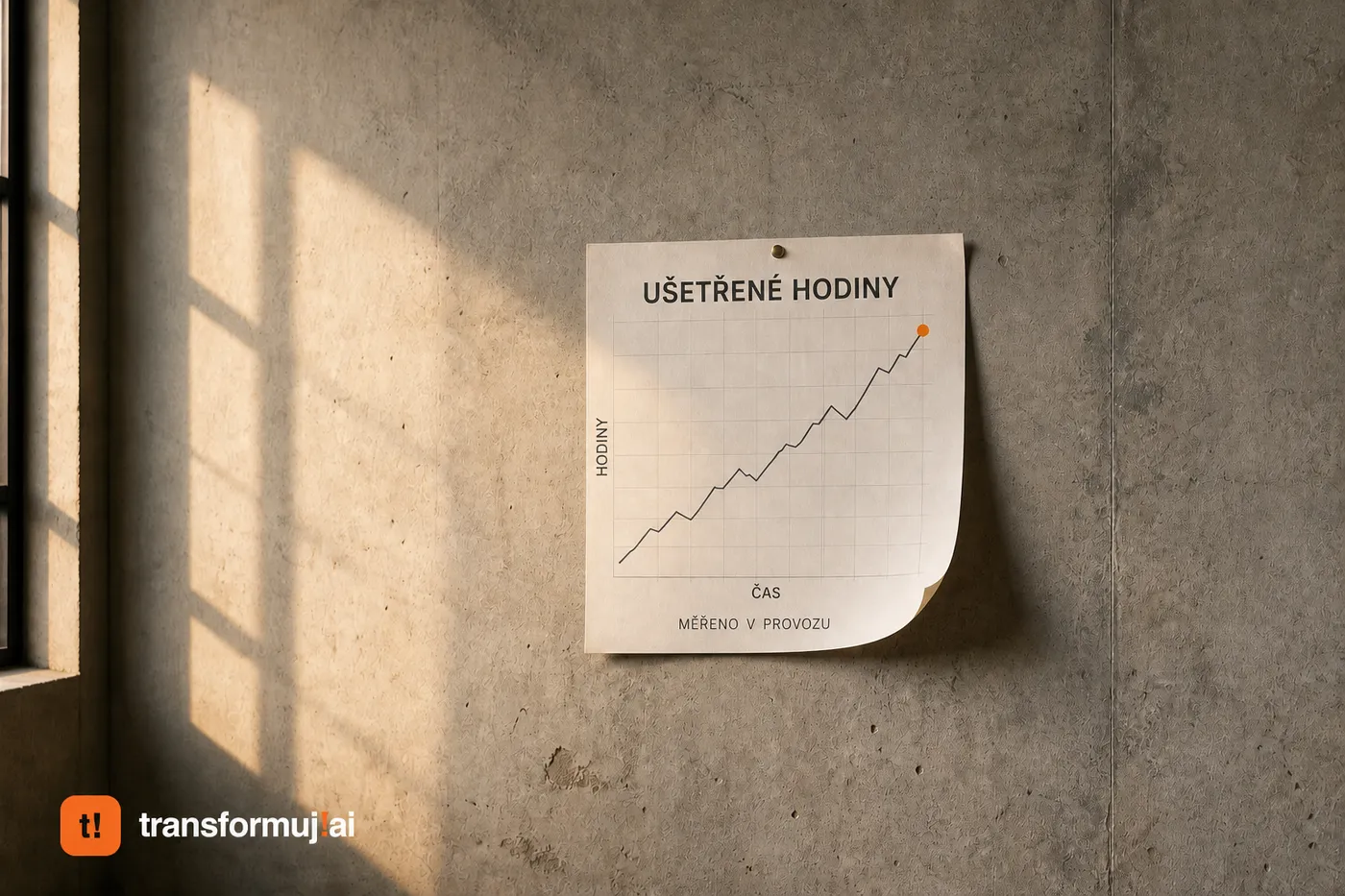
Wanting and needing are very different. That difference is found by asking a question, not by buying something. The tool comes at the very end. It confirms a decision that has already been made on the basis of numbers.
I wrote about how to calculate the return and whom to vet before you sign the invoice for the delivery itself in the article “Money goes in, but nothing is measured”. What to calculate and whom to vet before you buy an AI implementation: https://www.linkedin.com/pulse/investuje-se-ale-neměří-co-si-spočítat-koho-prověřit-než-jakub-liška-gkmgf/. This text is about the step before that: what to acquire at all.
How much of the last AI brief in your company went through these three questions before a solution was ordered?
If you want to discuss whether what you want is really what you need, it can be done in a 15-minute intro call: cal.com/transformuj.ai/30min. And if after that call I say you can manage on your own, I'll tell you right there.
The article was first published on LinkedIn. Original article on LinkedIn